



“We spent more than a month in the desert. There was no water; so we were drinking our urine to survive. At a time, urine was no longer coming out. Some of us had blood coming out instead of urine.”
A 23-year-old female Libya returnee to Nigeria, Endurance Daniel, has recounted the harrowing ordeal she endured during her migration journey, revealing that she and other migrants were forced to drink their urine to survive due to lack of water while crossing the desert.
Daniel spoke to Journalists, on Wednesday, after returning to Nigeria as part of a group of 182 migrants recently assisted home by the International Organization for Migration (IOM).
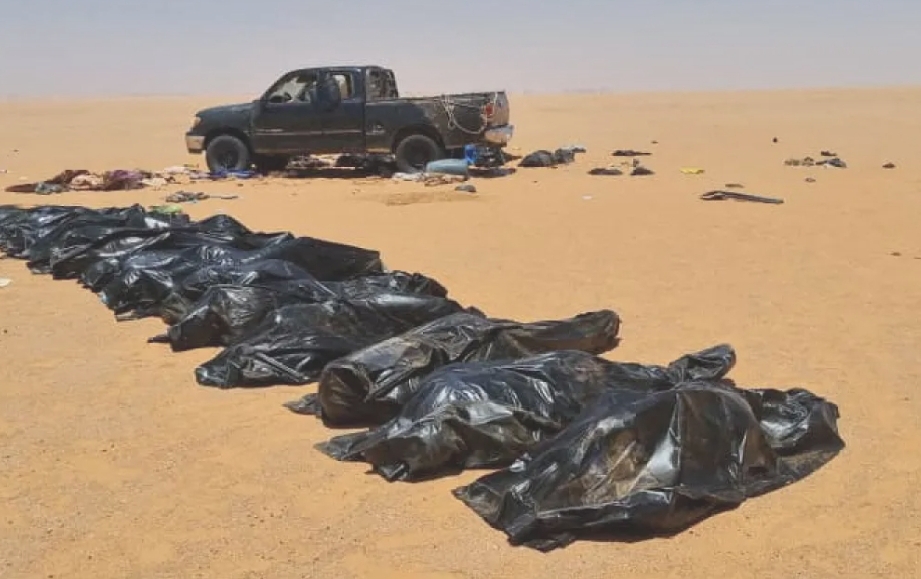
She said she travelled to Libya with 52 other migrants in a single vehicle, but seven people died during the journey as a result of the harsh conditions they encountered.
Read Also: Senegal Intercepts Wooden Boat Carrying 112 Migrants Trying To Cross Atlantic
Recounting her experience, Daniel said she left Nigeria at the age of 17 after being persuaded by promises of employment and better opportunities in the North African country.
“We spent more than a month in the desert. There was no water; so we were drinking our urine to survive. At a time, urine was no longer coming out. Some of us had blood coming out instead of urine,” she said.
“Those who died were left where we stayed in the desert. We watched their bodies decay for days because we had nowhere else to go and there was nothing we could do.”
According to Daniel, it was a friend of her mother who convinced the family that travelling to Libya would offer a pathway to a better life.
“My mother’s friend told my mother that her children were there and doing well. She said I could work for less than a year and make good money,” she stated.
The woman, she said, assured her that after repaying her sponsor through domestic work, she would be free to pursue any occupation or even establish her own business.
“She told me that I could even open a shop after settling my sponsor. Things were difficult at home. My family was suffering, with no food to eat. So, I decided to go (to Libya),” she said.
Daniel explained that she arrived in Libya in 2019 but quickly discovered that reality was far different from the promises that had been made before her departure.
“On getting to Libya, my sponsor told me there were only two jobs available for women migrants, domestic work and prostitution. There was nothing else,” she recounted.
The returnee said she immediately sought a way back home, but her efforts were frustrated by the trafficker, who insisted that she first repay the transportation costs incurred during the trip.
“When I asked for a phone to contact my family, he (the trafficker) refused. He feared my family would send money for me to return (to Nigeria),” she said.
Daniel alleged that traffickers relied on intimidation, threats and exploitation to maintain control over migrants, often forcing them into situations against their wishes.
“He (the trafficker) said that if we refused his instructions, he would sell us to places where people were forced into prostitution. We were frightened and decided to follow his instructions,” she said.
She further claimed that the promise of being allowed to communicate with family members was frequently used as leverage to pressure vulnerable migrants into exploitative relationships.
“I accepted because I desperately wanted to speak with my family. It had been months since I last heard from them,” she said.
Daniel also narrated the extreme hardships faced during the desert crossing, describing severe dehydration, hunger and the deaths of several migrants travelling alongside her.
According to her, the surviving migrants were eventually taken to camps where they were given inadequate food before being handed over to their sponsors.
“They gave us plain spaghetti without salt or anything else. We ate it because we had no choice,” she said.
She added that migrants were often hidden inside vehicles and transported secretly to evade security operatives and immigration authorities.
“If they found you during inspections, you could end up in prison. If they did not, you were considered lucky,” she said.
Despite the traumatic experience, Daniel expressed gratitude for the opportunity to return home safely.
She urged young Nigerians considering irregular migration to carefully verify opportunities abroad and avoid making life-changing decisions based on unverified promises.
“People should not believe everything they are told. What I experienced was completely different from the promises made before I left,” she concluded. – NPN
Share your thoughts on the story Libya: How Returnee ‘Drank Urine’ To Survive Desert Experience with Nigerian Kicker in the comments section.