


Whether you’re a Journalist, media entrepreneur, educational institution, NGO, religious organization, or content creator, now is the perfect time to take your broadcasting online.
The internet has transformed the way people consume audio content. Gone are the days when listeners depended solely on traditional FM and AM radio stations to enjoy music, news, sports, and educational programs. Today, millions of people access audio content through websites, mobile apps, smart speakers, and social media platforms.
As digital broadcasting continues to grow, two terms are frequently used interchangeably: Radio Streaming and Online Radio.
Although they are closely related, they do not mean the same thing. Understanding the difference is essential for broadcasters, journalists, podcasters, media organizations, educational institutions, religious organizations, businesses, and content creators who want to reach audiences over the internet.
In this comprehensive guide, we’ll explain the differences between radio streaming and online radio, how each works, their advantages, and which option is best suited for your goals.
What Is Radio Streaming?
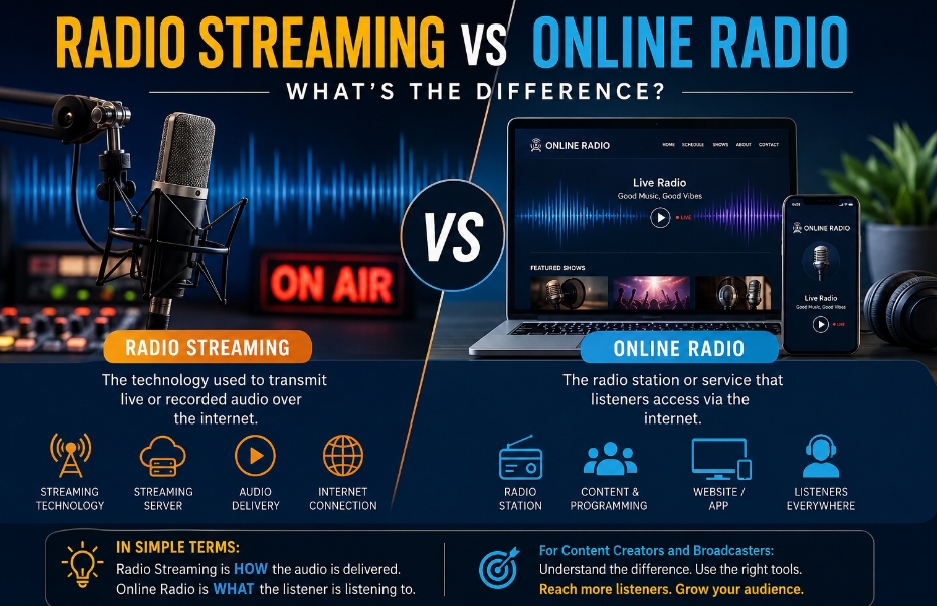
Radio streaming is the process of transmitting audio over the internet in real time. Instead of using traditional FM or AM frequencies, audio is delivered through internet-connected devices such as smartphones, computers, tablets, smart TVs, and smart speakers.
Radio streaming is primarily a technology rather than a complete broadcasting service.
With radio streaming, anyone can broadcast live audio, including:
- FM radio stations
- Churches and mosques
- Conferences and seminars
- Sports commentary
- Political events
- Corporate meetings
- Educational lectures
- Concerts
- Podcasts recorded live
The goal is simple: make live audio accessible to listeners anywhere in the world through an internet connection.
Read also: What You Need to Start Online Radio Streaming (Beginner’s Guide)
What Is Online Radio?
Online radio, also known as internet radio, is a complete radio station that broadcasts entirely through the internet. Unlike radio streaming, which simply delivers audio, online radio includes all the elements people expect from a traditional radio station.
An online radio station often includes:
- Live presenters and DJs
- Scheduled programmes
- Music playlists
- News bulletins
- Interviews
- Talk shows
- Advertisements
- Jingles
- Listener interaction
- Podcasts and replay content
Listeners tune in through a website, mobile app, smart speaker, or dedicated media player instead of an FM or AM frequency.
In simple terms, online radio uses radio streaming technology to deliver a complete broadcasting experience.
The Key Difference
The easiest way to understand the difference is this:
- Radio Streaming is the technology that delivers audio over the internet.
- Online Radio is a radio station that uses that technology to broadcast programmes.
Every online radio station depends on radio streaming, but not every radio stream is an online radio station.
Radio Streaming vs Online Radio Comparison
| Feature | Radio Streaming | Online Radio |
|---|---|---|
| Purpose | Deliver live or recorded audio | Operate a complete internet radio station |
| Main Focus | Audio transmission | Radio broadcasting |
| Presenters | Optional | Usually included |
| Programme Schedule | Not required | Essential |
| Music Library | Optional | Common |
| News & Talk Shows | Optional | Common |
| Listener Interaction | Limited | Frequently available |
| Mobile App | Optional | Recommended |
| Website | Optional | Usually required |
| Monetization | Event-based | Multiple revenue opportunities |
How Radio Streaming Works
A typical radio streaming setup includes:
- Audio source such as a microphone or mixer.
- Broadcasting software or encoder.
- Streaming server.
- Website or mobile app where listeners connect.
Once the presenter begins speaking, the encoder converts the audio into a digital stream and sends it to the streaming server, which distributes it to listeners worldwide with minimal delay.
Read also: Why Every Radio and Media House in Nigeria Needs a Modern Website in 2026
How Online Radio Works
An online radio station includes all of the above plus additional broadcasting tools such as:
- Automation software
- Programme scheduling
- AutoDJ
- Music management
- Presenter accounts
- Live call-ins
- News management
- Advertising system
- Analytics dashboard
- Mobile applications
These features make online radio suitable for continuous broadcasting, often 24 hours a day.
Benefits of Radio Streaming
Radio streaming offers several advantages:
- Low setup cost
- Global accessibility
- Easy to deploy
- Suitable for one-time events
- Supports live broadcasts
- Minimal equipment required
- Can be embedded on websites
- Compatible with smartphones and computers
This makes radio streaming an excellent option for organizations that occasionally need to broadcast live audio.
Benefits of Online Radio
Online radio provides a richer broadcasting experience.
Some benefits include:
- Worldwide audience reach
- Professional branding
- Continuous programming
- Automated playlists
- Revenue through advertising and sponsorship
- Audience analytics
- Podcast integration
- Mobile app support
- Social media integration
- Stronger audience engagement
For businesses and media organizations, online radio creates opportunities to build a loyal community and generate long-term revenue.
Who Should Choose Radio Streaming?
Radio streaming is ideal for:
- Churches
- Mosques
- Schools
- Universities
- Event organizers
- NGOs
- Government agencies
- Conference organizers
- Sports commentators
- Businesses hosting webinars
If your goal is simply to broadcast live audio when needed, radio streaming is usually the best option.
Read also: Types of Specialised Radio Stations: From Traffic Radio to Hospital Radio
Who Should Choose Online Radio?
Online radio is best suited for:
- Media companies
- Journalists
- Independent broadcasters
- Community organizations
- Educational institutions
- Entertainment companies
- Music brands
- Podcast networks
- News publishers
- Digital content creators
If you want to build a recognizable media brand with regular programming and audience engagement, online radio is the better choice.
Can an FM Radio Station Become an Online Radio?
Absolutely.
Many traditional FM stations now stream their broadcasts online while also offering exclusive internet-only content. This hybrid approach allows broadcasters to reach local listeners through FM and global audiences through the internet.
It also creates opportunities for mobile apps, podcasts, on-demand shows, and international advertising.
Essential Equipment You’ll Need
Whether you’re setting up radio streaming or an online radio station, you’ll typically need:
- A reliable computer
- High-quality microphone
- Audio mixer (optional)
- Headphones
- Stable internet connection
- Broadcasting software
- Streaming server
- Website
- Mobile application (recommended)
- Audio automation software (for online radio)
Investing in quality equipment improves sound clarity and enhances the listener experience.
Monetizing Radio Streaming and Online Radio
Both approaches can generate income through:
- Digital advertising
- Sponsored programmes
- Membership subscriptions
- Donations
- Affiliate marketing
- Event sponsorships
- Paid interviews
- Podcast sponsorships
- Premium content
- Brand partnerships
Online radio generally offers more monetization opportunities because of its continuous programming and broader audience engagement.
Read also: Web3 Explained: The Future of the Internet and Digital Ownership in 2026
Common Misconceptions
One common misconception is that radio streaming and online radio are identical. In reality, radio streaming is simply the technology that transports audio over the internet, while online radio combines that technology with programming, branding, scheduling, and audience engagement.
Another misconception is that setting up an online radio station requires a massive budget. Thanks to affordable streaming services, cloud hosting, and automation tools, creators and organizations of all sizes can launch professional online radio stations.
Final Thoughts
The future of broadcasting is digital, and understanding the distinction between radio streaming and online radio is essential for anyone entering the media industry.
If your goal is to stream occasional live events, conferences, worship services, or announcements, radio streaming is the right solution.
However, if you’re looking to establish a recognizable media brand with scheduled programmes, presenters, music, interviews, and monetization opportunities, then building an online radio station is the smarter long-term investment.
As internet access continues to expand and audiences increasingly consume content online, embracing digital audio broadcasting can help you reach listeners far beyond your local community.
Ready to launch your own online radio station or add professional radio streaming to your organization?
Whether you’re a journalist, media entrepreneur, educational institution, NGO, religious organization, or content creator, now is the perfect time to take your broadcasting online.
Need expert guidance on setting up an online radio station, streaming server, website, mobile app, or complete digital broadcasting solution? Our team can help you plan, build, and launch a reliable platform tailored to your goals. – ENGRMKS & CO
Contact us today to discuss your project and start reaching audiences around the world with professional internet broadcasting solutions. –
Share your thoughts on the story Read Difference Between Radio Streaming vs Online Radio with Nigerian Kicker in the comments section.